We are entering a new era in medical imaging. For the first time in history, the Dutch National 14 Tesla MRI Initiative in Medical Science (DYNAMIC) is building a 14 Tesla MRI scanner. While most clinical scanners operate at 1.5 or 3 Tesla—and there are only around 100 7 Tesla systems worldwide—this groundbreaking 14T scanner will establish a national and international resource, solidifying the Netherlands’ leadership in ultra-high-field imaging and its applications in medicine and neuroscience.
At present, a small number of MRI systems operate at 11.7 T. At these field strengths, conventional niobium–titanium (NbTi) superconducting technology approaches its upper critical field of approximately 12 T, making further increases increasingly challenging.
To surpass this barrier, DYNAMIC has selected a high-temperature superconductor (HTS) magnet. This advanced technology makes the move to 14T not only feasible but also practical, without imposing restrictive design limitations. By combining cutting-edge materials and engineering, DYNAMIC is poised to redefine what is possible in ultra-high-field MRI.
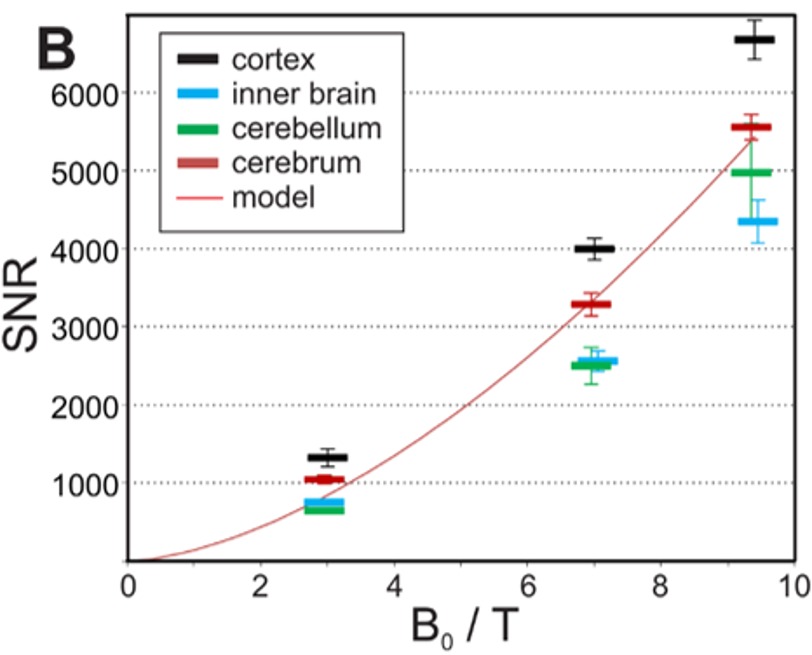
The driving force behind the leap to 14T is sensitivity.
In MRI, signal intensity depends on voxel volume, meaning that achieving higher spatial resolution in biologically meaningful domains requires a substantial increase in sensitivity. 14T is expected to triple the sensitivity compared to 7T, enabling researchers to explore finer structural and functional details than ever before.
The MRI scanner is the result of a strong collaborative effort between leading partners in the field. It will consist of a magnet built by Neoscan, combined with a Philips console and a modified Philips/WaveTronica RF system, specifically adapted for 14T (600 MHz) operation and multi-nuclear imaging. The system is further equipped with a high-performance gradient set supplied by Tesla Engineering. This project is realized as a joint effort within a consortium, in close collaboration with dedicated commercial partners.